Tools
Tools Tools
Tools


Holmes, Philip Michael  ORCID: 0000-0003-4897-582X, Parmar, Paresh ORCID: 0000-0003-3072-9372 and Bush, Phil
(2018)
Morske Musak.
[Show/Exhibition]
ORCID: 0000-0003-4897-582X, Parmar, Paresh ORCID: 0000-0003-3072-9372 and Bush, Phil
(2018)
Morske Musak.
[Show/Exhibition]
![[thumbnail of Morske Mušak: A Symphony Inspired by the Adriatic Sea]](https://knowledge.lancashire.ac.uk/id/eprint/57769/1/Morske%20Mu%C5%A1ak%20A%20Symphony%20Inspired%20by%20the%20Adriatic%20Sea.png "Morske Mušak: A Symphony Inspired by the Adriatic Sea") 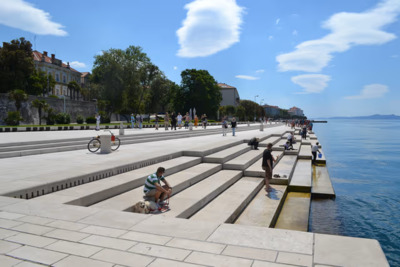 Preview |
Image (PNG) (Morske Mušak: A Symphony Inspired by the Adriatic Sea)
- Cover Image
361kB |
![[thumbnail of WARNING: [youtube] Falling back to generic n function search.]](https://knowledge.lancashire.ac.uk/style/images/fileicons/video.png "WARNING: [youtube] Falling back to generic n function search.") |
Video
Restricted to Repository staff only |
Official URL: https://www.globalsoundmovement.com/blog/morske-mu...
Abstract
Morske Musak is an interactive sonic art installation developed by the Global Sound Movement that investigates the relationships between sound, architecture, environment, and participatory authorship. Grounded in field recordings captured at the Sea Organ (Morske Orgulje) in Zadar, Croatia—an internationally recognised architectural sound sculpture by Nikola Bašić (2005)—the work reinterprets this landmark site through practice-based research methods that extend its acoustic logic into a digitally mediated, interactive context. The Sea Organ converts the kinetic energy of the Adriatic Sea into continuously varying harmonic tones through a system of underwater pipes embedded within marble steps. Morske Musak samples these emergent sonic processes and re-situates them within an interactive interface developed using Ableton Live, enabling participants to manipulate, layer, and recombine the sounds in real time. This positions the environment itself as a co-author within the compositional process, reframing listening as an embodied, performative, and spatial practice rather than a passive mode of reception. The project draws on critical frameworks from sound studies and sonic art, particularly the work of R. Murray Schafer on soundscape and acoustic ecology, and Brandon LaBelle’s theorisation of sound as a social and spatial practice. In doing so, Morske Musak advances field recording beyond documentation, employing it instead as a tool for public engagement and experiential research into how sound mediates relationships between place, perception, and agency.
Situated within the lineage of site-responsive sound practices associated with artists such as Max Neuhaus and Bill Fontana, the installation contributes to ongoing debates in contemporary art concerning immateriality, temporality, and participation. By translating a fixed, site-specific architectural artwork into a dynamic platform for co-creation, Morske Musak demonstrates how practice-as-research can generate new modes of audience interaction with environmental sound. The work evidences the continuity between physical and virtual architectures of listening, offering an accessible model for engaging diverse publics with experimental sound practices and expanding understandings of how architecture may be experienced as an evolving, audible system.
Repository Staff Only: item control page
 https://orcid.org/0000-0003-4897-582X